Friday, October 28, 2016

Happy Halloween

I have to say that I love these whole group collaborative projects where each students does a different little project as part of a larger communal project! The school held a door decorating contest. We brainstormed on the board some ideas for it and then each student picked what they wanted to make. 


 I had never heard of Freddy Fras bear... but he turned out really creepy


Our finished door. We didn't win "but we tried our best and maybe next time" (We did win being the class with the most box tops this month!) 


We also connected with another class over skype for the pumpkin seed project. The pumpkin had over 500 seeds! Amazing!

Multiplication Station

If a student can't add fluently, how are they supposed to learn multiplication? It has been a little surprising to have some students not be able to add +1 or +2 without being able to use their fingers. Now that we are finishing up our quarter, I am realizing that students are able to do the work but it takes them way longer because they are counting up the long way. 

A couple years ago, the reading scores were really low across the school and so they had a big push towards building better readers. I'm happy to say that my class of readers are on grade level. However, now the school is realizing that now they need to put some more care into the math curriculum. 3rd grade and up is going to be doing their multiplication tables. In a month, the principal will hold an ice cream party for those who can say their tables.  I made an ice cream table to show which number students had practice rote saying their tables. They have to say 0-12 for that number in 30 seconds. 


I tend to shy away from rote learning, but I understand why it is important here. The students have enjoyed practicing it through ipad games, writing it out on the whiteboards, smartboard, and practicing timing each other.

Friday, October 21, 2016

3rd Graders Discuss the 3rd Debate

"I just wanted to hear them talk about taxes" was a surprising revelation from one of my 3rd Graders this morning. "I think Hillary will raise more taxes for people who make $250,000, but Donald won't"

I had shied away from discussing the 2nd debate with the students because I wasn't comfortable with some of the subject matter that would be brought up. Students should not be exposed to "locker room talk" especially that it is being discussed as being acceptable language.

My voter registration had come in the mail and I showed the students and explained that on November 8, I would go and vote. Everyone in Alaska will vote on that day. Depending on if more people vote for Hilary or Donald, Alaska will turn RED or BLUE.
 I pulled up the electoral map on the smartboard and asked if they knew why Alaska had the number 3 and California had the number 55 on it.

"Is it because California is bigger?" No, its because there are 39 million people in California but only 700,00+ people in Alaska. They were a little concerned that Alaska was red, which meant that Alaska's points would go to Trump. I explained that there were 2 teams. The Red Team thought each States is different and should get to decide their own rules whereas the Blue Team thought that because we were all USA, we should have the same rules. Alaska is different from most other states so they want to make their own rules, so Alaska usually votes with the red team.

"Why are those places brown?" Red means that they usually vote for the red team, pink means we think they will vote for the red team. Blue means they vote for the blue team, and light  blue means that they will probably vote for the blue team. This map is a prediction, we don't know who will win yet. "I think that is called an estimation" (Very nice use to our Math talk)

"Can we see the map when Obama won?" I pulled it up, they were curious about Mitt Romney and John Mccain and asked about them. This is all history. It is fascinating. Next week, I will have them choose President or First Lady Biographies to read and we will talk about how the government works.

#GRAPAX

https://theglobalreadaloud.com/

We are participating in the global read-aloud of the book, PAX. Every week, we connect with other 3rd grade classes on twitter to talk about the chapters for the week. Next week, we will be hosting. Am trying to set up a skype so that another classroom will read to us one day.


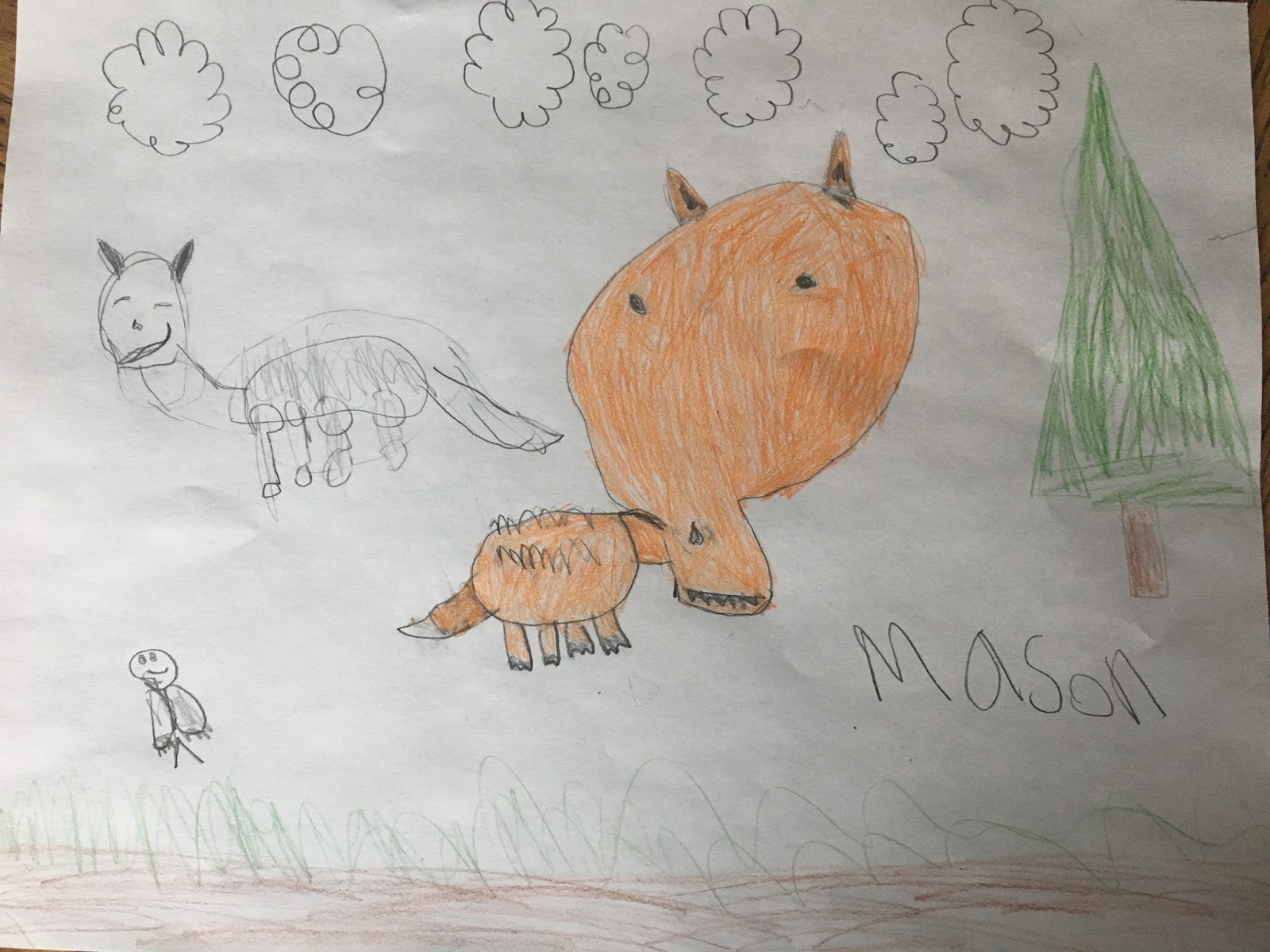
Here are some great illustrations that the students did of Pax. 

A couple students made the prediction that Peter & Pax will find each other at the end. 

PAX is a great book talking about sustainability & the effects of war. Highly recommended reading!


Wednesday, October 19, 2016

Vocabulary.com

I am hopelessly addicted to vocabulary.com I love words. I love new & interesting words. Discombobulated. Defenestration. Effervescence. The English language is just full of interesting terms. The High School English teacher showed off this website at our in-service last week, so I started doing it with my students as a center time activity.

I can create word lists like the words that I notice they are mis-spelling or mis-using or just a fun '3rd Grade Halloween Words" with words like phantom, ghost, pumpkin, haunted, glow, shiver, scary... I also put a list of our 3rd grade spelling bee words.

The kids can track who has logged the most points on our leaderboard. Since I play too, their target is usually to "beat teacher!" or a classmate. T logged 10,000 points last week! Our school is currently #2 in Alaska.


I caught myself playing this weekend. Words are awesome, I'm happy to share my love with the students :)

Happy Alaska Day!

Teaching local history & geography is so important. I have been surprised that most schools in Alaska do not close to observe Alaska Day and that most students did not know the history behind it. We used to live in Sitka and it is a big deal there (since thats where it was officially handed over). Seems like an important piece of history! 

The students have gotten pretty savvy with US geography through mystery skype (They use the mississippi river, pacific/atlantic orientation, great lakes, time zones to figure out where other classes are) , so for Alaska Day I arranged a mystery session with two classes in Alaska:  Nikolaevsk & Haines. 

Alaska is made of 5 regions: Far North, Interior, Southcentral, Southwest, and SouthEast. There are 6 major rivers: Yukon, Copper, Colville, Koyukuk, Kuskokwim, and Tananna Rivers. Also numerous State Parks, Wildlife refuges, mountains. I had fun discussing the difference between islands (such as Kodiak or the Aleutian Islands) and peninsulas (such as Seward, Kenai) 

It was harder trying to figure out what city rather than what state they were in, but it was fun! Added a different layer of difficulty.


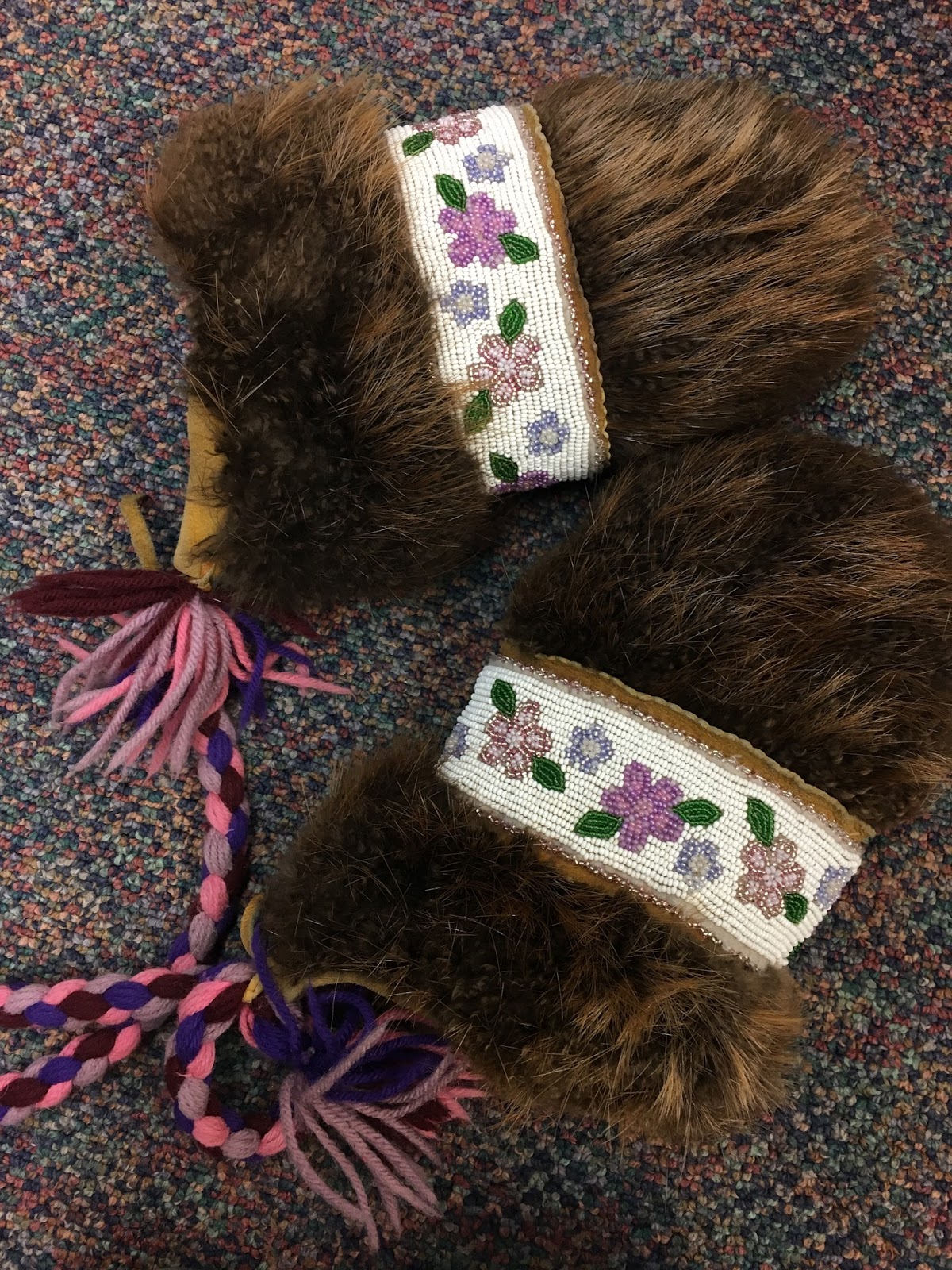
On a side note: I have been learning beading through culture class. The Gwichin are well-known for their beautiful beadwork. 

 Here is my attempt #2. Starting to look like something. I really like beading because you start with the small individual beads and it grows into something more. 


I started a Donors Choose Project:"My students need a Wonder Workshop Dash and Dot Robot Wonder Pack, to build 21st century skills from traditional skills. My students live in a rural area. If they want to remain here, they will need be innovators. They currently love to code. Getting a Dash and Dot robot is the next step to be able to turn those coding skills into something more meaningful.
Athabascans are known for their beadwork; in a lot of ways, coding is also like beading.
It relies on patterns and problem-solving in on a small scale to create a larger picture. The students have a natural aptitude for it and I'd love to continue to engage them.
The first day of school, I had the students write goals for the year. A lot of them wanted to invent something. One student in particular wanted to invent a robot arm to test if chicken eggs were good to eat. I started coding with all the students and we would like a way to extend these written codes into some action!"

https://www.donorschoose.org/project/innovating-in-the-artic/2230952/?rf=link-siteshare-2016-10-teacher-teacher_3909731&challengeid=20846457


Thursday, October 13, 2016

Mistakes are OK

 I hated math when I was in school mostly because you either had the right answer or the wrong answer. It was such a black and white process. I know there are a lot of criticisms about how math is being taught now and believe me, I have them too, but I do love how mistakes are OK.

We were discussing the 4 times tables. A students drew an array to show the answer, but miscounted and wrote "31" A mistake lead to a discussion on how 31 could not be an answer because 4 and 8 were even numbers and that the answer had to be an even number.

 Another thing that I continue to love is how math nowadays stresses how there are multiple ways to find the solution to a question. I always tell the students to "find a way that makes it easy for yourself to understand"
 I only let them come up to the board to share if they have a way that hasn't already been shared, so sometimes they come up with really creative ways to do it! I love how in this way, you are able to individualize math!